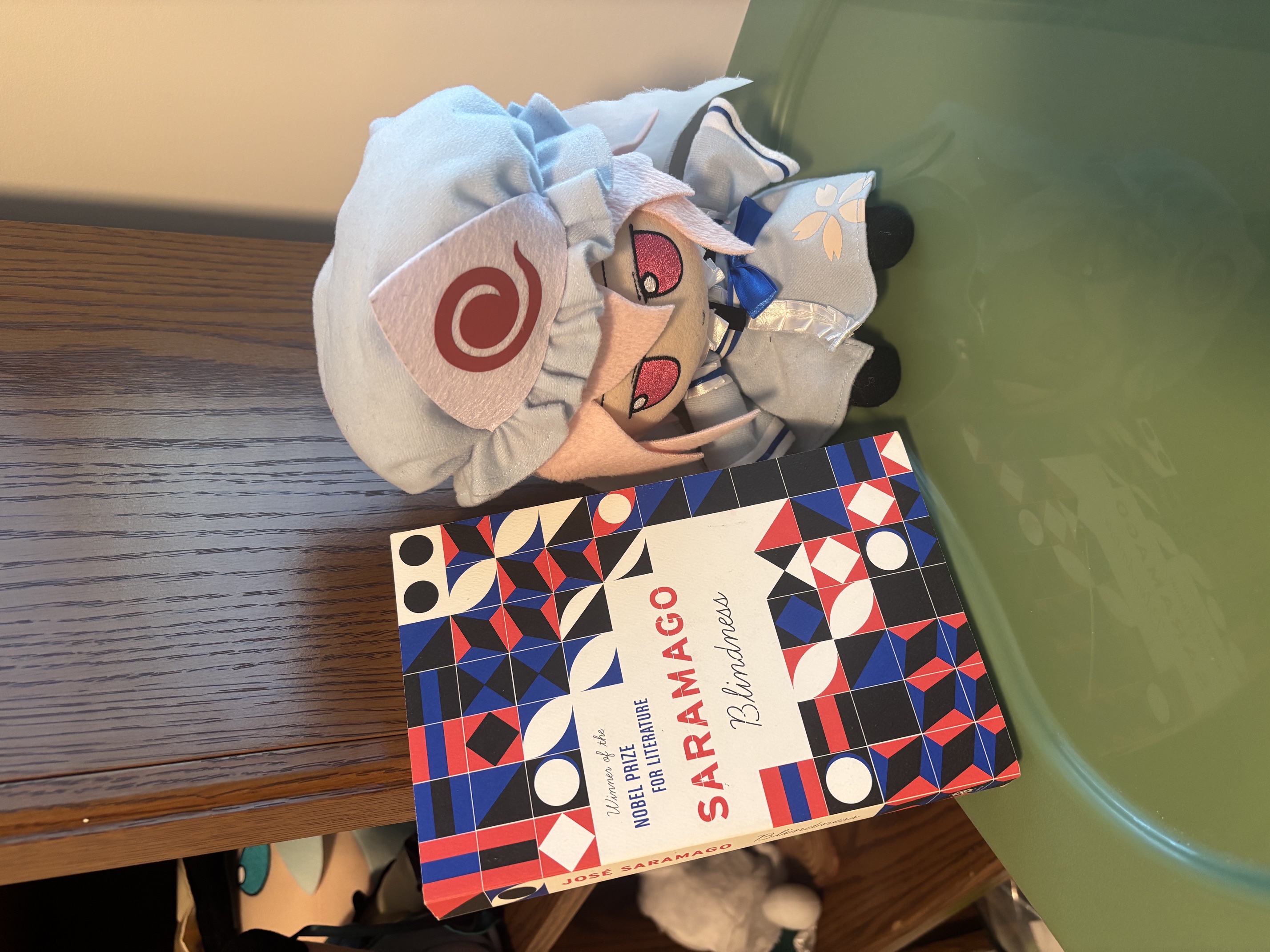
All great calamities start with a flashpoint. In the case of World War I, the calamity that set the tone for the 20th century, was initiated by the assassination of Archduke Franz Ferdinand in his car in the middle of the day. In turn, it is no surprise that Blindness, Saramago's reflection on the 20th century that was written in its waning moments, has patient zero of its titular white blindness epidemic be a man crashing his car at an intersection. The novel then shows in detail the cascading effects of this initial flashpoint, charting the path to the bulk of the calamity; the causality of what to the uninitiated can look like isolated incidents becoming clear once one zooms out.
The bulk of the action takes place in an internment camp where suspected and confirmed victims of the white blindness are quarantined. Any illusion that this camp would operate as a functioning society is quashed, as man's inhumanity to man rules the day. The floor plan of the camp is practically unnavigable before it eventually collapses due to strain, resources are scare enough that an intention for battles to be fought over them is clear, and individual acts of brutality such as rapes and murders are described in detail.
There is a singular fully able witness in the asylum to all of this, initially there to accompany her blind doctor husband. Her role in this story evokes some of the primary takeaways of the 20th century as a whole. First off, reported on unprecedented real-world atrocities throughout history has generally not been believed if not for those who survived it speaking out. Additionally, the leadership the doctor's wife exhibits when guiding the other featured characters to safety is wholly consistent with what the Stockdale Paradox teaches: you must accept the reality of the situation while having unwavering faith that you will get out of it.
When the surviving internees are free to return to the outside world, they find out that the outside world has been irrevocably changed just like themselves. Not only that, it changed because of the calamity they went through. While the start of the story parallels the start of the first World War, the end evokes the end of the second. "Genocide" and "nuclear weapons" entering our collective dictionaries fundamentally changed our relationship with the world and what humanity is capable of. The epitath on architect Christopher Wren's memorial ends with the phrase "If you seek (his) monument, look around you", which has been lifted to also describe the global consequences of World War II. As the blind former internees adjust to living in the world they have been released to, one can imagine the seeing in their lives explaining to them how the white blindness changed everything surrounding them.