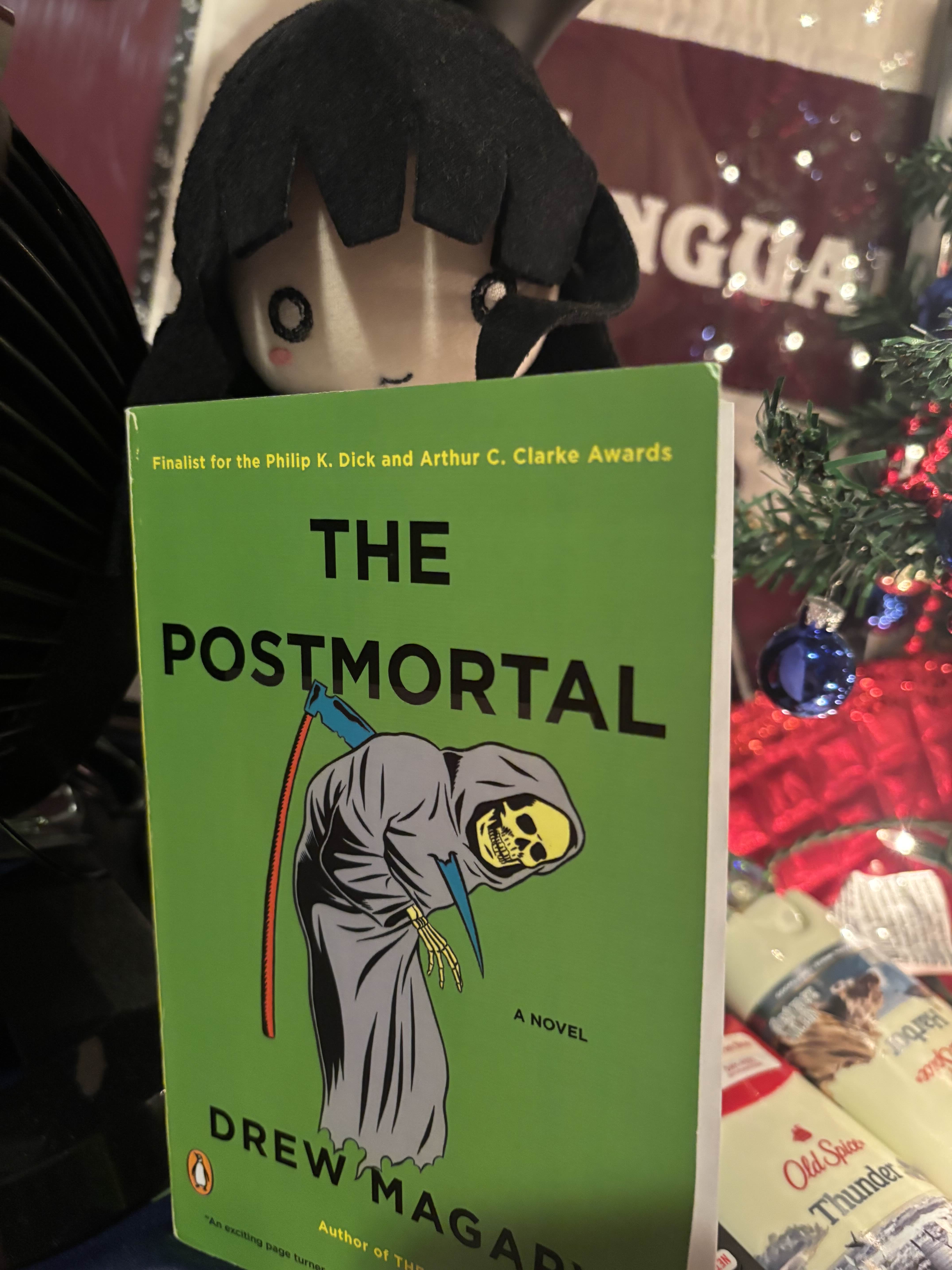
In the decades to follow since The Cure became a fact of life, governments decided to fight back against the cancer through subsidizing the developing euthanasia industry, known by the euphemism End Specialization. While postmortal human lives have been cheapened to the point that anyone who believes they have a reason to kill will glady claim the title End Specialist whether they are formally sanctioned to do so or not (hence the cancer cell metaphor), our protagonist John Farrell has a measured, more altruistic response for taking up the call:
I've had people in my life who got to die on their own terms. And I've had people in my life who didn't have any say in the matter. I don't want anyone to have to go out that way if they don't want to. I want to help.
When end specialization was introduced to the narrative, I quickly made note of what compound was used for the euthanasia. Instead of any of our world's currently in use lethal injection procedures for humans, the end specialists are using sodium fluoroacetate. Sodium fluoroacetate, also known by the trade name Compound 1080, is a very popular rodenticide. Postmortal humanity is now being compared to rats in addition to cancer cells. And much like rats, they carry the plague.
We first see this unknown plague break out at the hospital Farrell is being treated for a heart attack he suffered after a particularly, ahem, intense end specialization. His sister had the plague incubate in her from this outbreak, and it claimed her and her family. Farrell could only "watch" their final moments through the WEPS screen as they died unseen. This pestilence is identified as sheep flu, incubating in a postmortal sheep on a farm for decades and with a global death toll of 500 million and counting. The job of end specialization has now evolved into doing "sweeps"; roaming the land for sheep flu outbreaks and either extorting the victims for everything they own for a shot at a robovaccine or mercy killing with the sodium fluoroacetate.
Pestilence is not the only Horseman on duty; War and Famine are tag teaming this time around. China's plan to curtail its population is to declare nuclear war on itself, compared to resetting the corrupted save file of a video game. The entity most effectively championing War and Famine in this world is Russia. In the process of making their expansionist dreams reality, they pillaged everywhere, kidnapping men for their "farms" (slave labor camps) and women for "far more temporary reasons". While these and other forms of mass oppression have certainly resulted in a quote-unquote "manageable" society, the units ordered to do these despicable acts found themselves just as emaciated as those they were capturing; many going rogue in an attempt to survive the famine.
When the Church of Man was introduced as the fastest-growing religion of postmortal society. it stressed that this life is the afterlife, and that the earth is heaven. This prognostication would be proven wrong in turn. Death, the final Horseman, eventually shows up by the end of the novel. The important thing about Death is that Hades will follow them, and I couldn't think of a better way to describe the of postmortal society collapsing on itself in nuclear hellfire.