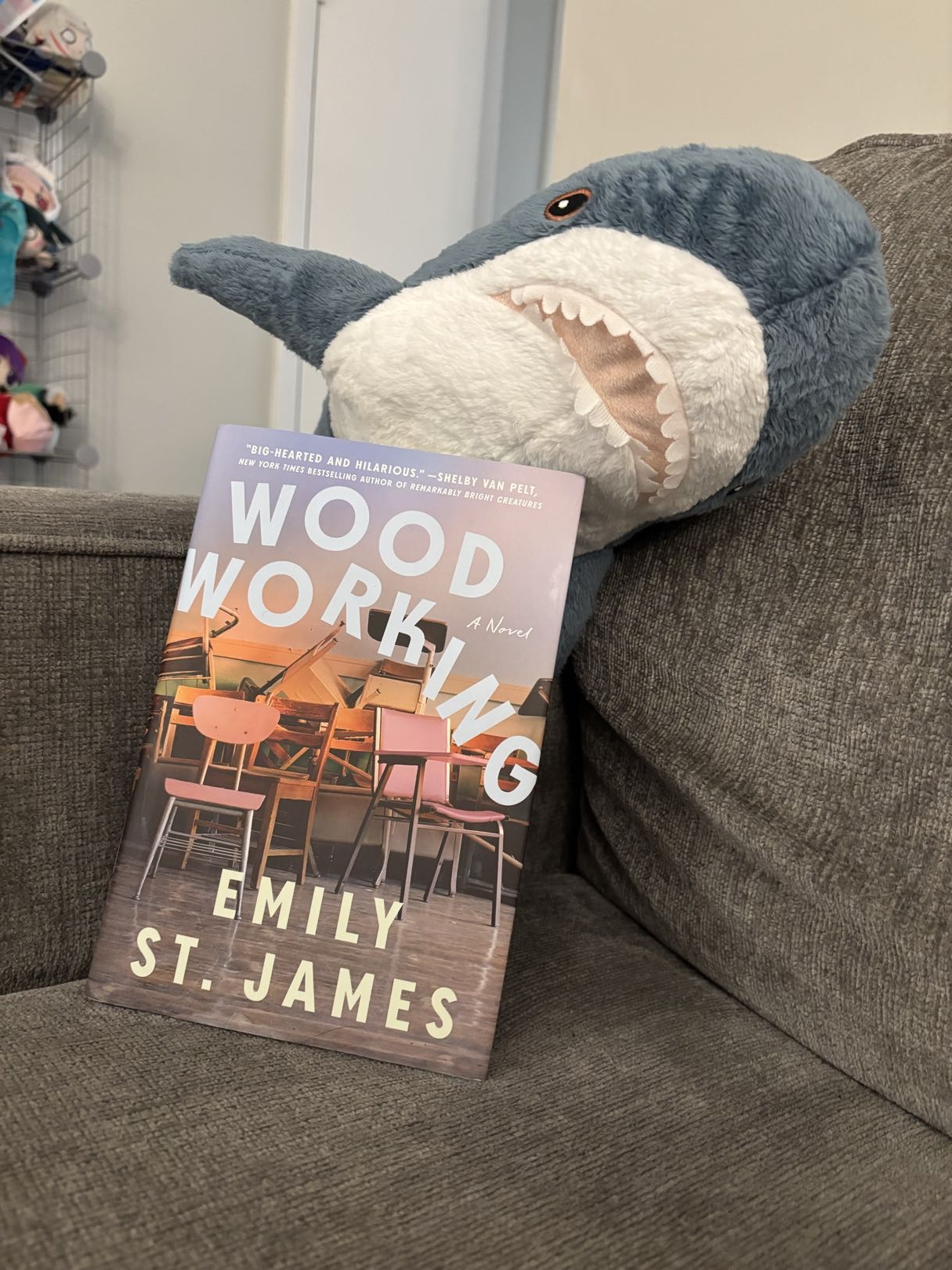
We meet Erica Skyberg at a nadir, being unable to bridge the divide between the life she wishes she had and the life she actually lives. By choosing to seal herself inside the closet, she ceded any chance to save her marriage with Constance. She was embedded deep enough in said closet that she crowded out interactions with the outside world, presenting herself as a blank slate for anyone who asks her "what's wrong" to psychoanalyze in their head. Abigail Hawkes entering her life as a student of hers is a revelation for her, and her initial guidance through early transition leads Erica on the path towards coming out to Constance in the hopes of setting things right.
Throughout the remainder of the story, Erica hears and feels the clock ticking. While successfully confessing to Constance certainly lifted a huge burden off of her, Erica correctly senses that it is far from a panacea. Public-facing transition is a huge risk for her in particular, as she is a teacher in blood-red Mitchell, South Dakota who may have her companionship with Abigail misconstrued into something illicit. Preparing for the gamut of possible outcomes of her approach to coming out drives Erica's behavior throughout. Chief among this concerns is the transience of her renewed relationship with Constance. When Erica was in the closet, she figured that the best she would get was to exist on the periphery of Constance's life story. Upon coming out, she was thrust into being the center of her universe.
Even if coming out to her boss went well, the decision to move away is made for her: longtime state legislator Isaiah Rose outs her in the debate leading up to the general election. Fortunately, she has a landing spot in mind where she can only ever be known as Erica, which she drives off to with hormones in hand.
The way Abigail Hawkes sees it, her current living situation in Mitchell is a lame duck. She figures that if she can just survive until her 18th birthday, she can run as far away from anyone currently aiming crosshairs at her as possible.
What's striking is that Abigail not only has to face bog-standard transphobia, but also several levels of exploitation. Before she recognizes that their cameraderie is genuine, Abigail feels strongly that Erica is overeager in asking Abigail "Transgender 101" questions. Abigail's older sister Jennifer and her partner Ron, nominally the biggest safeguards against her parents' designs to detransition her, are revealed to want Abigail to be part of their own twisted "nuclear family" and are more than happy to use her as a pawn in a custody battle. The brunt of Abigail's exploitation comes from Caleb as his relationship to her drifts from "boy she sometimes has sex with" to "real boyfriend". While the Daniels family as a whole is behaving odd in one way or another about Abigail's trans identity, Caleb's obsession is unhealthy. He writes a schlocky fantasy manuscript with a very obvious Abigail stand-in, makes drawings of her nude, and, most flagrantly of all, deadnames her in his college essay.
The disappearing acts Abigail sees in her future are less "plans" and more "impulses". The desires she is acting on boil boil down to "being left alone" and "not having her deadname constrict around her neck like an albatross". At her lowest, she catches wind of a late night bus headed to Denver that she intends to take. She is saved from this runaway status by Megan extending a lifeline and a reminder that stories told in past tense are inherently sadder than those in present tense.
When all's said and done, Abigail gets the opportunity of a lifetime to pay the confidence she has in her gender forward. The positive affirmations and watchful eyes she imparts onto Zoe during her shift handing out fliers outside of a Wal-Mart make it so that she's ok.
The reveal that Brooke Daniels was herself trans and the recollection of the story of her molding herself into the way she is today on her odyssey from Chicago to Mitchell are masterfully crafted. Every detail of Brooke's dysphoria, shattered birth family, and step on the path to llving life free from those things.
Brooke exemplified what it meant to disappear into the woodworking. The concept comes to her by way of Octavia, a trans woman who was at the diner where Brooke first got her hormones. It exists in Brooke's mind as the escape route of the prison that is her past life. These plans go horribly right as she reaches her final destination. In slamming down the baskpace key, Brooke also deleted parts of her who are proud of who she is and show solidarity with others who are like her.Those cruicially deleted aspects are what she prays for a mulligan for.
As I progressed throughout the book, I started to make mental notes of some recurring motifs. I gravitated towards the counting of the exact days one was locked in the closet and/or marching along towards a major transition milestone, along with the accentuation of visceral disgust towards one's deadname. Most prominently, however, is Emily St James's use of multiple different writing perspectives as our protagonists navigate their reaiity. Abigal is entirely written in first person, as we are introduced to her as the fully realized version of herself. Erica is written in third person during her self-discovery journey and then shifts to first person once she both self-actualizes and is freed from the burdens of her past. Finally, the Brooke that embraces her transgender identity is constantly lecturring the Brooke that currently exists in the second person, eventually taking the reigns to start the process of coming out to the rest of the world with a letter to her sister Jeannie...